
Neuroplasticity for Knowledge Workers: Neuroscience-Backed Systems to Learn Faster, Retain More, and Master Skills in the AI Era
Table of Content
- Why Neuroplasticity Matters More Than Ever for Knowledge Workers in the AI Era
- The Neuroscience of Neuroplasticity: What Actually Happens in Your Brain When You Learn
- The Decline of Natural Plasticity: How Modern Work, Screens, and AI Are Reshaping Your Brain
- Core Principles of Neuroplasticity That Most Professionals Get Wrong
- Assessing Your Current Learning Capacity: Quick Diagnostics for Engineers and Analysts
- Foundational Protocols: Evidence-Based Ways to Trigger and Amplify Neuroplasticity Daily
- Advanced Techniques: Spaced Repetition, Error-Driven Learning, and Deliberate Difficulty
- Skill Stacking and Compound Learning: Building Career-Defining Expertise Efficiently
- Integrating AI as a Neuroplasticity Accelerator (Without Outsourcing Your Thinking)
- Memory Systems and Retention Frameworks Optimized for Knowledge Work
- Overcoming Plateaus, Forgetting Curves, and Cognitive Interference
- Designing Your Personal Neuroplasticity Operating System: Weekly and Quarterly Routines
- Measuring Progress: Metrics and Biomarkers That Actually Matter for Professionals
- Long-Term Brain Health: Protecting and Extending Peak Plasticity Past 40
- Implementation Roadmap: Your 30-Day Neuroplasticity Transformation Plan
- Conclusion
Why Neuroplasticity Matters More Than Ever for Knowledge Workers in the AI Era
Your brain is adapting right now — whether you’re directing that process intentionally or not.
Every Slack notification, every ChatGPT prompt, every quick context switch between tabs is reinforcing certain neural pathways while weakening others. Most knowledge workers underestimate how dramatically modern digital environments shape cognition over time.
That matters because the economy is changing faster than traditional learning models can keep up with.
Research from McKinsey and the World Economic Forum suggests that analytical thinking, creativity, adaptability, and resilience will become even more valuable as AI automates routine tasks. By 2030, an estimated 59% of employees will require reskilling. In practical terms, the professionals who learn fastest and adapt continuously will hold a major advantage.
At the same time, emerging neuroscience research points to a growing problem. Studies from MIT Media Lab indicate that excessive dependence on AI systems can reduce meaningful cognitive load by roughly 32% while significantly weakening important EEG alpha/theta connectivity patterns associated with active thinking and learning. In other words, outsourcing too much cognition may gradually reduce the brain’s incentive to strengthen itself.
That’s where neuroplasticity becomes strategically important.
Neuroplasticity for knowledge workers is no longer just an interesting neuroscience concept. It’s becoming a career survival skill. The ability to deliberately rewire your brain for faster learning, stronger retention, deeper focus, and better reasoning may determine who thrives in AI-augmented industries over the next decade.
This is not about squeezing more hours into your day. It’s about building a brain that adapts more efficiently.
The Neuroscience of Neuroplasticity: What Actually Happens in Your Brain When You Learn
Learning feels mental, but biologically, it’s physical reconstruction.
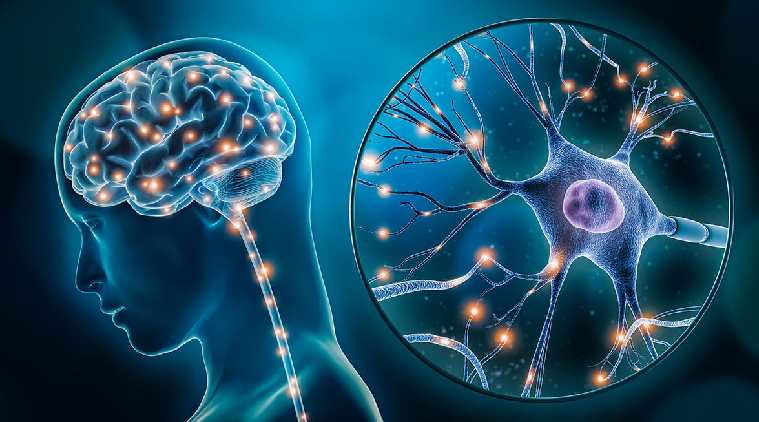
Every time you repeatedly engage with a concept, solve a difficult problem, or practice a new skill, your brain changes at the cellular level. Repeated activation strengthens communication between neurons through a process known as long-term potentiation (LTP). Synapses become more efficient, neurotransmitter receptors increase, and signal transmission improves.
Over time, structural changes follow.
Dendrites branch outward. New synaptic connections form. In certain regions of the brain, including parts of the hippocampus, neurogenesis can occur under the right conditions. This process follows the classic Hebbian principle: “cells that fire together wire together.”
Your brain also becomes more selective. Frequently used neural pathways strengthen while weaker or unused pathways get pruned away. This experience-dependent plasticity is one reason repeated practice matters so much. Consistency doesn’t just improve performance psychologically — it reshapes the architecture supporting that performance.
For software engineers, analysts, accountants, and other technical professionals, this has enormous implications.
Mastering a new framework, modeling system, programming language, or analytical process is not simply a matter of memorization. You are effectively upgrading the brain’s underlying circuitry for solving increasingly complex problems.
That’s why deep learning periods often feel mentally exhausting at first. Your brain is reallocating energy and restructuring networks in response to challenge.
The Decline of Natural Plasticity: How Modern Work, Screens, and AI Are Reshaping Your Brain
The modern workplace is highly optimized for stimulation but often terrible for sustained cognitive development.
Constant notifications fragment attention. Endless scrolling conditions novelty-seeking behavior. AI tools reduce friction so effectively that many professionals stop engaging deeply with difficult thinking altogether.
The problem isn’t technology itself. The problem is passive usage.
Studies on cognitive offloading show that when people habitually outsource memory, reasoning, or problem-solving to external systems, long-term retention and independent judgment begin to weaken. Moderate digital assistance can support learning. Total dependence can erode it.
That distinction matters more in the AI era than many people realize.
Knowledge workers increasingly operate inside environments where answers are always available instantly. But immediate access to information is not the same as building durable internal models. If your brain never struggles, retrieves, synthesizes, or reconstructs information independently, neuroplastic engagement decreases.
The result is subtle but cumulative:
- shallower understanding
- weaker recall
- reduced mental endurance
- slower adaptation to unfamiliar problems
- increased cognitive fatigue
Many professionals mistake this for burnout or aging when, in reality, part of the issue is undertrained cognition.
The encouraging part is that neuroplasticity remains highly trainable throughout adulthood. The brain responds remarkably well once deliberate challenge and recovery are reintroduced consistently.
Core Principles of Neuroplasticity That Most Professionals Get Wrong
Many ambitious professionals approach learning with the wrong mental model.
One of the biggest misconceptions is believing knowledge, once acquired, remains stable indefinitely. In reality, the brain follows a brutal efficiency rule: unused circuits weaken.
“Use it or lose it” is not motivational language. It’s a biological reality.
Another common misunderstanding is assuming neuroplasticity largely disappears after childhood. While plasticity is strongest during early development, adult brains remain highly adaptable. The difference is that adults usually require more intentional repetition, emotional relevance, and focused engagement to trigger substantial rewiring.
Environment also matters more than most people think.
Negative assumptions about aging, cognitive decline, or “being bad at learning” can influence behavior patterns that accelerate decline. Research suggests chronic stress and limiting beliefs can contribute to hippocampal deterioration over time.
Specificity is another overlooked principle.
Generic brain-training apps often fail because improvements do not transfer broadly into real-world performance. Your brain adapts specifically to the demands you repeatedly place on it. If you want better analytical thinking, practice analytical thinking. If you want stronger coding intuition, repeatedly solve progressively harder engineering problems.
Neuroplasticity rewards targeted adaptation, not vague mental activity.
Assessing Your Current Learning Capacity: Quick Diagnostics for Engineers and Analysts
Before optimizing your learning systems, establish a baseline.
Working memory capacity varies considerably between individuals and strongly affects how efficiently people process information under cognitive load. Most people can actively manipulate somewhere between three and nine meaningful units at once, depending on expertise and context.
This partially explains why experienced professionals often appear to “learn faster.” In many cases, they are compressing information into larger mental chunks built from prior experience.
You can evaluate your current learning efficiency without formal lab testing.
Start with practical diagnostics:
- Test your recall of recent project details 48 hours after completion.
- Track how often you revisit documentation for recurring tasks.
- Analyze recurring errors in technical work.
- Measure focus duration before attention fragmentation occurs.
- Observe how quickly you can transfer concepts across domains.
Patterns matter more than isolated scores.
If you consistently forget recently learned concepts, struggle to retrieve information under pressure, or rely excessively on external references, those are signals that your learning systems need reinforcement.
The goal isn’t self-judgment. It’s awareness.
High-performing professionals treat cognition the same way elite athletes treat physical conditioning: measurable, trainable, and improvable over time.
Foundational Protocols: Evidence-Based Ways to Trigger and Amplify Neuroplasticity Daily
Most cognitive improvement starts with surprisingly unglamorous habits.
Aerobic exercise remains one of the most reliable ways to stimulate neuroplasticity. Even 20 to 30 minutes of brisk walking increases blood flow, supports neurogenesis, and improves the biochemical conditions required for learning and memory formation.
Sleep is equally critical.
During sleep, the brain consolidates information, strengthens relevant neural pathways, and clears metabolic waste. Chronic sleep deprivation doesn’t just reduce focus temporarily — it directly interferes with long-term learning efficiency.
Small daily cognitive practices also compound faster than many people expect.
A short focused review session after work, a deliberate retrieval exercise before meetings, or ten minutes spent reconstructing concepts from memory can significantly strengthen retention over time. The key is active engagement rather than passive exposure.
Challenge level matters too.
The brain responds most strongly when tasks are difficult enough to require effort but not so overwhelming that performance collapses entirely. This balance — sometimes called “desirable difficulty” — is where meaningful adaptation occurs.
Many professionals notice measurable improvements in clarity, recall, and decision-making within weeks once they consistently combine:
- physical movement
- quality sleep
- active retrieval
- progressively challenging practice
- focused attention
The fundamentals still matter because biology still matters.
Advanced Techniques: Spaced Repetition, Error-Driven Learning, and Deliberate Difficulty
Once foundational habits are stable, advanced learning systems become dramatically more effective.
Spaced repetition is one of the best-researched methods for long-term retention. Instead of cramming information repeatedly in short bursts, material is reviewed at strategically increasing intervals aligned with the brain’s forgetting curve.
A useful rule of thumb is reviewing information at intervals roughly 10–20% of the intended retention period.
This strengthens consolidation while reducing unnecessary repetition.
Error-driven learning is equally powerful. Many professionals instinctively avoid mistakes because errors feel inefficient. Neuroscience suggests the opposite can be true. Mistakes generate strong corrective signals that sharpen neural adaptation when paired with rapid feedback.
That’s why deliberate practice works.
Simply repeating familiar tasks produces diminishing returns. Struggling through progressively harder variations creates stronger long-term potentiation and deeper skill acquisition.
Interleaved practice also deserves more attention in knowledge work environments.
Rather than repeating identical tasks continuously, alternating between related skills forces the brain to retrieve and reconfigure patterns repeatedly. This increases neuronal coactivity and improves flexible problem-solving under real-world conditions.
The process often feels slower during practice. Long-term, it produces more resilient expertise.
Skill Stacking and Compound Learning: Building Career-Defining Expertise Efficiently
In volatile industries, isolated expertise becomes increasingly fragile.
The professionals creating outsized value today are often not the single best specialists in one narrow area. They are the people who combine multiple complementary skills into unusually powerful combinations.
The World Economic Forum projects that approximately 39% of core skills will change by 2030. That makes adaptability itself a competitive advantage.
Skill stacking allows neuroplasticity to compound across domains.
A software engineer who develops communication ability, AI fluency, systems thinking, and business literacy becomes far more difficult to replace than someone operating solely within technical execution.
The same pattern applies to analysts, consultants, accountants, researchers, and product professionals.
Over time, integrated expertise produces nonlinear returns because knowledge domains begin reinforcing each other. Mental models become transferable. Pattern recognition accelerates. Decision-making improves.
This is why T-shaped and M-shaped professionals increasingly stand out in AI-driven markets.
They do not simply know more. Their brains become better at synthesizing across contexts.
Integrating AI as a Neuroplasticity Accelerator (Without Outsourcing Your Thinking)
AI can either strengthen your cognition or quietly weaken it, depending on how you use it.
Passive consumption creates one outcome. Active collaboration creates another.
Research involving knowledge workers shows that individuals with greater confidence in their own reasoning tend to engage more critically with AI outputs. Those who overtrust AI often reduce verification effort and retain less information afterward.
The difference is cognitive participation.
Using AI to generate ideas, challenge assumptions, create analogies, simulate scenarios, or provide feedback can significantly enhance learning when you remain mentally engaged throughout the process.
Using AI to bypass thinking entirely produces the opposite effect.
A useful framework is this:
- Let AI accelerate exposure.
- Let your brain perform integration.
- Let retrieval and reasoning remain human responsibilities.
For example, asking ChatGPT to explain a concept three different ways can deepen understanding. But copying answers without reconstruction weakens memory formation and analytical flexibility.
The goal is augmentation, not dependency.
The strongest knowledge workers in the coming decade will likely be those who combine AI leverage with unusually strong independent cognition.
Memory Systems and Retention Frameworks Optimized for Knowledge Work
Elite knowledge work depends heavily on memory architecture.
Working memory functions through several coordinated systems, including the phonological loop, visuospatial sketchpad, central executive, and episodic buffer. Together, these systems temporarily hold and manipulate information during complex tasks.
But working memory alone is limited.
Long-term expertise emerges when information becomes encoded into stable mental schemas that reduce cognitive load. This is why experienced engineers can process large systems more efficiently than beginners. They are not thinking harder. They are relying on deeply integrated internal models.
Retrieval practice remains one of the most effective ways to build those models.
Actively reconstructing information from memory strengthens retention far more effectively than passive rereading. Contextual application matters too. Knowledge stored in isolation is harder to access under pressure.
Associative linking is particularly useful for technical professionals.
Connecting new programming concepts to existing frameworks, relating analytical models to prior business cases, or mapping unfamiliar ideas onto familiar systems creates richer neural indexing pathways.
The brain remembers connected information more efficiently than disconnected facts.
Overcoming Plateaus, Forgetting Curves, and Cognitive Interference
Every serious learner eventually hits a plateau.
Progress slows. Retention weakens. Skills that once improved rapidly begin feeling stagnant.
This is normal.
The forgetting curve causes retention to decline sharply without deliberate reinforcement. Strategic retrieval at expanding intervals is one of the most effective countermeasures.
Plateaus themselves often signal adaptation saturation rather than inability.
In many cases, the brain has become too comfortable with current training conditions. Increasing variation, introducing new constraints, or practicing under slightly more difficult conditions can reactivate meaningful plasticity.
Cognitive interference also plays a major role in knowledge work.
Learning multiple similar systems simultaneously — programming languages, frameworks, analytical models, or technical standards — can temporarily reduce recall precision. Structured spacing and contextual differentiation help reduce this interference.
Importantly, discomfort is often part of growth.
Many professionals abandon effective learning too early because temporary struggle feels like failure. In reality, error correction and reconstruction are often signs that the brain is reorganizing itself more efficiently.
Designing Your Personal Neuroplasticity Operating System: Weekly and Quarterly Routines
Sustainable cognitive growth rarely happens accidentally.
The highest-performing professionals tend to operate with structured systems rather than relying purely on motivation.
A practical neuroplasticity operating system includes:
- focused learning blocks
- deliberate recovery
- spaced review cycles
- skill progression tracking
- periodic environmental refreshes
Weekly routines should balance challenge with recovery. Specificity matters here as well. Practice should align directly with the capabilities you want to strengthen professionally.
Quarterly reviews are equally valuable.
Skill audits help identify stagnation, emerging industry shifts, and areas where compound learning opportunities exist. Many professionals dramatically underestimate how much cognitive momentum they lose through repetitive routines and unchanged environments.
Habit stacking makes implementation easier.
Embedding retrieval exercises into meetings, linking technical reviews to spaced recall, or pairing physical movement with learning sessions reduces friction and improves consistency.
The goal is not rigid optimization. It’s creating an adaptable system that your brain can sustain for years.
Measuring Progress: Metrics and Biomarkers That Actually Matter for Professionals
Most people track learning poorly.
Generic productivity scores and brain-training app metrics rarely reflect meaningful cognitive improvement in real-world environments.
More useful indicators include:
- faster problem-solving speed
- improved recall accuracy
- longer periods of uninterrupted focus
- reduced decision fatigue
- quicker transfer of skills across contexts
- increased ability to handle complexity
Subjective signals matter too.
If difficult tasks feel more manageable, if information retrieval becomes faster during conversations, or if mental exhaustion decreases after cognitively demanding work, those changes often reflect genuine adaptation.
Longitudinal tracking is especially important.
Neuroplastic gains compound gradually. Measuring progress across months rather than days gives a much clearer picture of cognitive development.
The best metric is usually this:
Are you becoming capable of handling problems that previously overwhelmed you?
Long-Term Brain Health: Protecting and Extending Peak Plasticity Past 40
Peak cognitive adaptability does not suddenly disappear after 40.
What changes is the cost of maintaining it.
Adults who continue exposing themselves to challenge, novelty, physical activity, and cognitively demanding environments can preserve substantial neuroplastic capacity far longer than outdated assumptions once suggested.
Stress management becomes increasingly important with age.
Chronic stress contributes to hippocampal shrinkage, impaired memory formation, and reduced synaptic flexibility. Recovery, sleep quality, physical movement, and meaningful engagement become essential protective factors.
Social and intellectual environments matter too.
People who remain curious, engaged, and mentally active tend to maintain stronger cognitive resilience over time. Lifelong learning is not merely a professional strategy — it is a neurological maintenance system.
Professionals who invest early in brain health often experience compounding returns later in life through:
- stronger adaptability
- better cognitive endurance
- sustained learning speed
- improved emotional regulation
- longer career flexibility
Brain capital compounds much like financial capital does.
Implementation Roadmap: Your 30-Day Neuroplasticity Transformation Plan
Theory only matters if it changes behavior.
Here’s a practical 30-day framework for building stronger neuroplasticity as a knowledge worker.
Week 1: Establish Awareness and Foundations
- Run learning diagnostics and attention audits.
- Improve sleep consistency.
- Add daily aerobic movement.
- Begin short active recall sessions.
- Reduce unnecessary notification exposure.
Week 2: Introduce Deliberate Cognitive Training
- Implement spaced repetition systems.
- Practice retrieval before reviewing notes.
- Introduce deliberate difficulty into technical work.
- Analyze mistakes instead of avoiding them.
Week 3: Build Compound Learning Systems
- Start skill stacking intentionally.
- Combine technical learning with communication or AI literacy.
- Use AI for guided questioning and feedback rather than passive answer generation.
- Experiment with interleaved practice across related domains.
Week 4: Design Your Long-Term Neuroplasticity Operating System
- Create weekly review systems.
- Establish quarterly skill audits.
- Track focus, retention, and performance metrics.
- Adjust environments to reduce cognitive fragmentation.
- Build sustainable routines that integrate directly into work life.
Structured learning systems that combine progressive challenge, retrieval practice, feedback, recovery, and reflection consistently produce measurable behavioral and neurological adaptation.
Many professionals report noticeable improvements in productivity, focus, recall, and decision-making within just a few weeks of deliberate implementation.
The key is consistency.
Your brain adapts to what you repeatedly ask it to do.
Conclusion
Neuroplasticity for knowledge workers is no longer a niche neuroscience topic. In the AI era, it is becoming one of the defining foundations of long-term professional relevance.
The professionals who thrive over the next decade will not necessarily be the people who work the hardest. They will be the people who learn the fastest, adapt the quickest, and preserve strong independent thinking while effectively leveraging AI.
That requires intentional brain training.
By understanding how neuroplasticity works, implementing evidence-based learning systems, and building an environment that supports deep cognitive adaptation, you can dramatically improve how you learn, retain information, solve problems, and master new skills.
Your brain is already changing every day.
The real question is whether you are shaping that process deliberately — or letting your environment shape it for you.